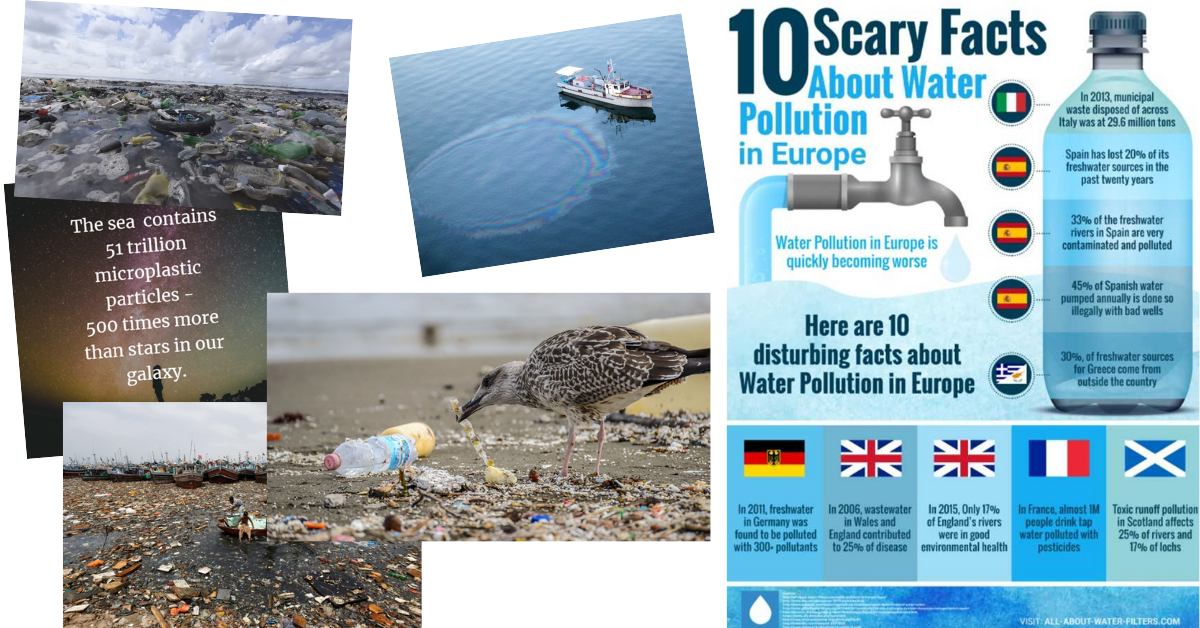
The ocean is one of the most unexplored parts of our planet, with a magnitude of undiscovered species and mysteries. It turns out from the studies conducted over the last few decades, this magnificent environment is under serious threat from human intervention, with plastics set to outnumber fish by 2050.
Marine life, as we know it, is suffering irreparable damage from the chemical pollution of the waters and the millions of tons of mismanaged waste dumped in the oceans each year. The result is a planetary crisis with over 100 million marine animal’s lives get lost every year, and the decay of the ocean's ecosystem.
Reports say that Almost 1,000 species of marine animals get impacted by ocean pollution, and we now have over 500 locations recorded as dead zones where marine life cannot exist. How did this happen, what is causing the most damage, find out everything below in the marine pollution statistics roundup.
Some Shoking Aquatic Pollution Statistics
The sea contains 51 trillion microplastic particles- 500 times more than stars in our galaxy.
About two million tons of sewage is dumped into the world’s water bodies daily. Annually, 14 billion pounds of garbage containing mostly plastic is thrown into the world’s oceans, causing large-scale destruction of marine life.
At least 70% of lakes and rivers in China are polluted, and more than half are too polluted for human use. The Yangtze River, China’s largest and the world’s third-largest river, is inundated with approximately 25 billion tons of sewage and industrial refuge.
1.3 million gallons of oil is spilled into the ocean every year.
50% of all sea turtles, 44% of all seabirds, 22% of all cetaceans, and a long list of fish species have already eaten plastics.
Each year 1.2 trillion gallons of untreated sewage, stormwater, and industrial waste are dumped into U.S. waters.
100 million marine animals die each year from plastic waste alone.
100,000 marine animals die from getting entangled in plastic yearly – this is just the creatures we find!
1 in 3 marine mammal species get found entangled in litter, 12-14,000 tons of plastic are ingested by North Pacific fish yearly.
In the past 10 years, we’ve made more plastic than the last century. By 2050, the pollution of fish will be outnumbered by our dumped plastic.
The largest trash site on the planet is the Great Pacific Garbage Patch, twice the surface area of Texas, it outnumbers sea life there 6 to 1.
China is ranked #1 for mismanaged waste and plastics. However, the US is in the top 20 with a more significant waste per person contributions.
300 Million tons of plastic gets created yearly, and this weighs the same as the entire human population, and 50% is single-use only.
There are 5.25 trillion pieces of plastic waste estimated to be in our oceans. 269,000 tons float, 4 billion microfibers per km² dwell below the surface.
70% of our debris sinks into the ocean's ecosystem, 15% floats, and 15% lands on our beaches.
In terms of plastic, 8.3 million tons are discarded in the sea yearly. Of which, 236,000 are ingestible microplastics that marine creatures mistake for food.
Plastics take 500-1000 years to degrade; currently 79% is sent to landfills or the ocean, while only 9% is recycled, and 12% gets incinerated.
1950-1998 over 100 nuclear blast tests occurred in our oceans.
500 marine locations are now recorded as dead zones globally, currently the size of the United Kingdom’s surface (245,000 km²).
80% of global marine pollution comes from agriculture runoff, untreated sewage, discharge of nutrients and pesticides.
90% of the worldwide ocean debris comes from 10 rivers alone.