Considering the vast amount of ocean not yet discovered (more than 80%), we can only judge from 7% of the ocean we have explored.
According to UNESCO (United Nations Educational, Scientific and Cultural Organization), about 226,000 marine species have been identified and discovered as of 2021, while scientists estimate that there are about a million marine species in total.
Out of these, about 2,700 species are listed as endangered or threatened globally under the ESA (U.S. Endangered Species Act)
Some of these species are mentioned below-
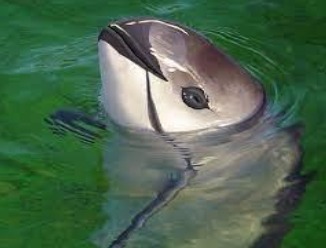
Physical Features- Vaquita are a species of porpoise, which are a group of aquatic mammals similar to a dolphin, although they are more closely related to narwhals and belugas than to dolphins.
They have strong bodies with a rounded head and no beak. They have black patches around their eyes and lips and small, spade-shaped teeth. They are about 140cm-150cm in length.
Where are they found? They are only found in a small 1,500 square-mile area in Mexico’s upper Gulf of California, near the town of San Felipe. They are protected by both Endangered Species Act and Marine Mammal Protection Act; The Biosphere Reserve has banned gillnet fishing in the area.
Number of Species- Fewer than 20 of these animals remain, making them the most endangered marine mammal in the World. Whereas in 1997, they were about 600 in number and a decline of 90% in their population has been observed between 2011 and 2016 alone.
Why are they endangered? The Vaquita population has been degrading since decades, recently accelerated by illegal fishing with gill-nets for the endangered totoaba, a large fish sought after for its swim bladder. Vaquita Porpoise get entangled in these gill-nets and they drown within minutes. More than 300,000 whales, porpoises and dolphins get entangled in fishing nets annually, most of them die and few that get away do so with severe injuries.
How can you help? The window of opportunity for saving the vaquita is closing fast, but extinction is still preventable. You can help by making the right choices at the supermarket, by donating to conservation efforts, or simply by spreading the word.
Organizations such as Porpoise.org aim for the protection and conservation of all species or porpoise and their natural habitats through research and education.
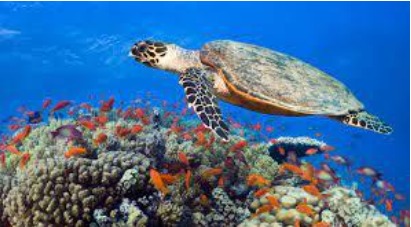
Physical Features These turtles belong to the family Cheloniidae, they are the only extant species in the genus Eretmochelys.
Named for its narrow head and sharp, bird-like beak, they weigh between 100-200 pounds (45-90 kg) and reach 2-3 feet (roughly .5 to 1 meter) in length. They have mottled shells consisting of an irregular combination of shades of amber, orange, red, yellow, black and brown. Their shells have serrated edges, with overlapping scutes.
Where are they found? They often nest in small numbers, and usually on remote beaches. The largest population of Hawksbills are found in West Atlantic (Caribbean), Indian and Indo-Pacific Oceans. Australia and Solomon Islands consist of the maximum number of Hawksbill Turtles.
Number of Species The population Hawksbill Turtle has declined by over 80% over the last century. An estimated population of fewer than 25,000 nesting females are found across the tropics.
Why are they endangered? They were hunted to extinction almost to extinction prior the ban on the tortoiseshell trade; Japan imported an estimated 2 million turtles between 1950 and 1992, despite the fact that the international trade of their shells is now illegal, there is still a thriving black market. Other threats include destruction of their habitats, pollution, boat strikes, coastal development, entanglement in fishing gear, consumption of their meat and eggs, and destructive fishing practices like dynamite fishing.
How can you help? Organization such as WWF (worldwildlife.org) aims to reduce turtle bycatch by working with fisheries to switch to more turtle-friendly fishing hooks, establish marine protected areas to ensure sea turtles have a safe place to nest, feed and migrate freely.
One can participate in coastal clean-ups and reduce plastic use, we shouldn’t disturb nesting turtles, nests, or hatchlings and should only admire them from a respectable distance.
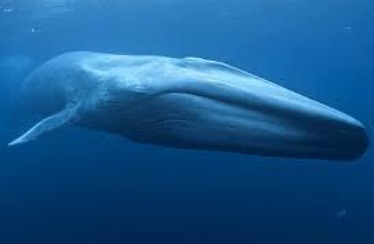
Physical FeaturesThey are the largest animals known to have ever existed.
Their maximum confirmed length is 29.9 meters (roughly 98 feet) and they weigh up to 199 metric tons (about 438720 pounds). The Blue Whale’s long and slender body can be of various shades of greyish-blue dorsally and somewhat lighter underneath.
Where are they found?The Blue Whale is found alone or in a small group in all oceans except the Arctic Ocean, but populations in the Southern Hemisphere are much larger. In the Northern Hemisphere, Blue Whales can be seen regularly in The Gulf of St. Lawrence and off the coasts of Monterey, California and Baja California, Mexico.
Number of SpeciesThere are only about 10,000 to 25,000 Blue Whales left in the world as of now. The populations of the blue whale have decreased exponentially since about 1911. More precisely, the current size of this animal’s population is only about 3 to 11% of its size during the previous century.
Why are they endangered?The reason for their endangerment is the result of many human activities and some natural threats. Between 1904 and 1967, more than 350,000 blue whales were killed. The most notable threat whales face is the whaling industry which is responsible for killing hundreds of thousands of blue whales. This industry thrives off the oil produced from whale blubber and in the past, the bones of the whales.
How can you help?The U.S. has officially outlawed whaling in 1971 to prevent further degradation in the population of such whales.
One can help by being responsible and while viewing marine life, we should observe small whales from a safe distance of at least 100 yards, and if spotted some marine life in distress(sick, injured, entangled, stranded or dead),we should report it immediately to make sure professional responders and scientists know about it and can take appropriate action.