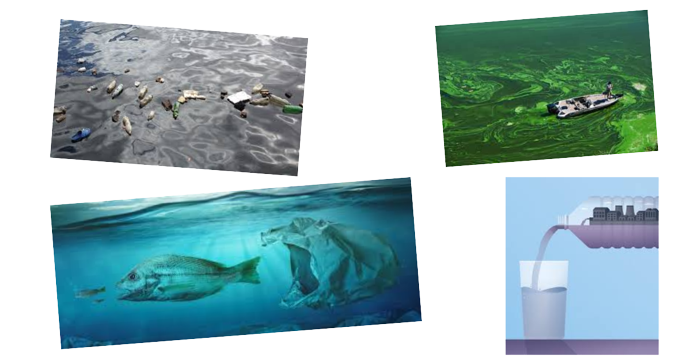
Aquatic Pollution or water pollution is the contamination of water sources by substances which make the water unusable for drinking, cooking, cleaning, swimming, and other activities.
Unsurprisingly, human activity is primarily responsible for water pollution, even if natural phenomena - such as landslides and floods - can also contribute to degrading the water quality.
- Sewage and Wastewater- Inadequate sewage collection and treatment are sources of water pollution. According to the United Nations, more than 80% of the worldwide wastewater goes back in the environment without being treated or reused.
- Industries- Industries produce a lot of waste containing toxic chemicals and pollutants. A huge amount of the industrial waste is drained in the fresh water which then flows into canals, rivers and eventually in the sea. Another source of water pollution is the burning of fossil fuels, causing air pollution like acid rain which then flows to streams, lakes, and other stretches of water.
- Marine dumping- Everyday, garbage such as plastic, paper, aluminum, food, glass, or rubber are deposited into the sea. These items take weeks to hundreds of years to decompose, and thus they are a major cause for water pollution.
Some rivers, lakes, and groundwater are rendered unfit for usage. In India, the River Ganges is the sixth most polluted river in the world. This is unsurprising as hundreds of industries nearby release their effluents into the river. Furthermore, religious activities such as burials and cremations near the shore contribute to pollution. Apart from the ecological implications, this river poses a serious health risks as it can cause diseases like typhoid and cholera.
Pollution of the Ganges is also driving some of the distinct fauna to extinction. The Ganges River shark is a critically endangered species that belong to the order Carcharhiniformes. The Ganges River dolphin is another endangered species of dolphin that is found in the tributaries of the Ganges and Brahmaputra rivers.
As per a survey, by the end of 2026, around 4 billion people will face a shortage of water. Presently, around 1.2 billion people worldwide do not have access to clean, potable water and proper sanitation. It is also projected that nearly 1000 children die every year in India due to water-related issues. Groundwater is an important source of water, but unfortunately, even that is susceptible to pollution. Hence, water pollution is quite an important social issue that needs to be addressed promptly.